Finding the Right Visual Assets: Evaluating the Cute Scientist Boy Vector Pack 01
For anyone involved in branding, content creation, or educational design, sourcing high-quality, adaptable illustrations is a recurring task. Visual libraries need to be versatile, professional, and cost-effective. Among the many options available, themed vector packs like the Cute Scientist Boy Vector Pack 01 represent a specific category of resource designed for projects requiring a consistent, stylized aesthetic. This article examines the distinct characteristics of this pack, its practical applications, and how to assess whether it aligns with your project's needs compared to other common approaches.
What Defines the Cute Scientist Boy Vector Pack 01
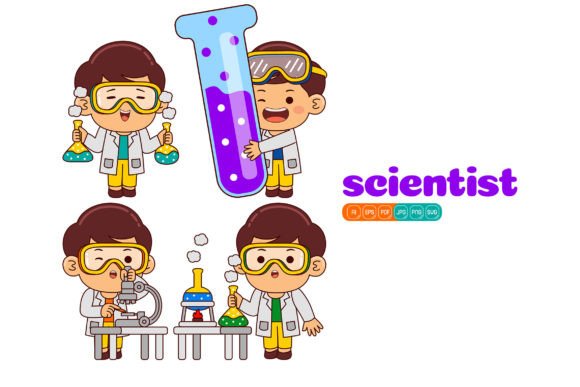
At its core, the Cute Scientist Boy Vector Pack 01 is a curated collection of 100 individual illustrations centered around a young scientist character and associated thematic elements. The "cute" descriptor points to its flat design style, which employs simplified shapes, clean lines, and a friendly, approachable visual tone. This is distinct from more realistic illustration styles or complex 3D renders. As a vector-based resource, every component is built using mathematical paths rather than pixels. This technical foundation is crucial, as it enables the key advertised benefits: infinite resizing without quality loss and the ability to edit every color and shape within compatible software like Adobe Illustrator.
The pack's composition—offering AI, EPS, PDF, SVG, JPG, and PNG files—addresses different user workflows. The vector formats (AI, EPS, SVG) are for deep customization and integration into other vector projects, while the raster outputs (high-res JPG, transparent PNG) serve quick placement in digital or print media. The 5000 x 5000 pixel specification for raster files provides a substantial resolution buffer for most applications. This multi-format delivery is a significant consideration when comparing resources, as some illustration packs may only provide final raster images, locking you into a fixed design.
Strengths and Primary Use Cases
The primary strength of a pack like this is its thematic coherence and customizability. When branding a science camp, developing educational infographics for children, or creating promotional materials for a STEM-focused app, having a unified set of icons, characters, and objects—all in the same flat, cute style—streamlines design work. You avoid the visual dissonance that comes from piecing together disparate assets from multiple sources.
The ability to create countless variations through color changes and element combination is a functional advantage. For instance, you could adjust the scientist boy’s lab coat color to match your brand palette, or isolate a flask element from one illustration and combine it with a book from another to create a unique scene for a specific landing page banner. This level of editing is typically only possible with true vector files, setting such packs apart from pre-rendered stock photo subscriptions.
Practical examples of best-fit situations include:
- Business Branding for Niches: A children’s educational publisher needing consistent illustrations across website, social media, and printed workbooks.
- Infographic and Presentation Design: Creating a series of slides or charts about scientific concepts that benefit from a lighthearted, engaging visual tone.
- Digital Promotion: Developing ad banners and social media posts for a product launch targeting parents and young learners.
Tradeoffs and Comparison with Alternative Approaches
While the Cute Scientist Boy Vector Pack 01 offers clear benefits in its niche, it’s important to consider its inherent limitations and compare it to other common methods for sourcing visuals. The "cute scientist boy" theme is specific. If your project requires a more serious, adult-oriented, or diverse range of characters, this pack may be too narrow. Its style, while professionally executed, is a deliberate aesthetic choice. A project needing photorealistic imagery, hand-drawn sketches, or a different cultural representation would find this resource a poor fit.
Comparing acquisition models is also key. Alternatives include:
- General Stock Illustration Sites: These offer vast libraries covering countless themes and styles, often via subscription. The tradeoff here is a lack of thematic cohesion. Finding 100 different scientist illustrations in the same style from a general site can be time-consuming, and each may have different licensing terms.
- Commissioning Custom Illustrations: This provides total creative control and uniqueness but involves higher cost, longer timelines, and requires clear communication with a designer.
- Using Free or Open-Source Vector Libraries: These can be excellent for budget-conscious projects, but the available themes are often limited, quality can be inconsistent, and you may need to compromise on the exact style or subject matter you desire.
Decision Factors for Potential Users
Evaluating whether this vector pack is the right choice involves a few concrete decision factors.
Project Scope and Theme Alignment
First, assess the scope and duration of your project. Is it a single one-off graphic, or a sustained campaign requiring many visuals? For longer, theme-heavy projects, a dedicated pack provides efficiency. Crucially, does the "cute scientist" concept align with your brand voice and target audience? If your messaging is playful, educational, and aimed at younger demographics or families, the alignment is strong. If your tone is technical, corporate, or aimed at professional researchers, the mismatch would be a significant drawback.
Technical Capacity and Design Needs
Second, consider your team’s technical capacity. The promise of easy customization is predicated on having access to and basic proficiency with vector software like Adobe Illustrator. If your workflow is exclusively based on simpler tools that only handle PNG or JPG files (like many basic social media or website builders), you will utilize the pre-made raster files but forfeit the deeper customization benefits. In that case, you must decide if the pre-set colors and compositions still suit your needs.
Budget and Licensing Considerations
Finally, weigh the budget against the value of a complete, editable set. Purchasing a themed vector pack is typically a one-time cost. Compare this to the recurring subscription fee of a stock service or the high upfront cost of custom illustration. Also, scrutinize the licensing terms of any resource. The pack’s description suggests usage for branding, promotion, and websites, but a prudent user should always verify the specific license for commercial use, redistribution, and any limitations.
When This Pack Is the Right Choice, and When to Look Elsewhere
The Cute Scientist Boy Vector Pack 01 is likely an excellent resource when your project parameters match its offerings. You need a cohesive set of science-themed visuals, you appreciate or require the flat design style, your audience responds well to a friendly "cute" aesthetic, and you have the capability or desire to customize colors and elements. It solves the problem of visual consistency and provides a scalable asset library for multiple touchpoints—from website icons to printed flyers.
You may need to explore other options if:
- Your project demands a visual style outside of flat "cute" design, such as realism, abstraction, or a different artistic genre.
- The scientist theme is too narrow, and you require illustrations covering broader or unrelated subjects.
- You lack the software or design resources to edit vector files, making the customization features irrelevant.
- Your brand requires illustration diversity in characters, including varied ages, genders, or ethnicities, which a single-character-focused pack cannot provide.
Making an informed decision about visual resources ultimately balances thematic needs, practical constraints, and budgetary considerations. By understanding the specific attributes, strengths, and limitations of offerings like the Cute Scientist Boy Vector Pack 01, you can better navigate the available alternatives and select the asset strategy that most effectively supports your project's goals and ensures a coherent, professional visual identity.